

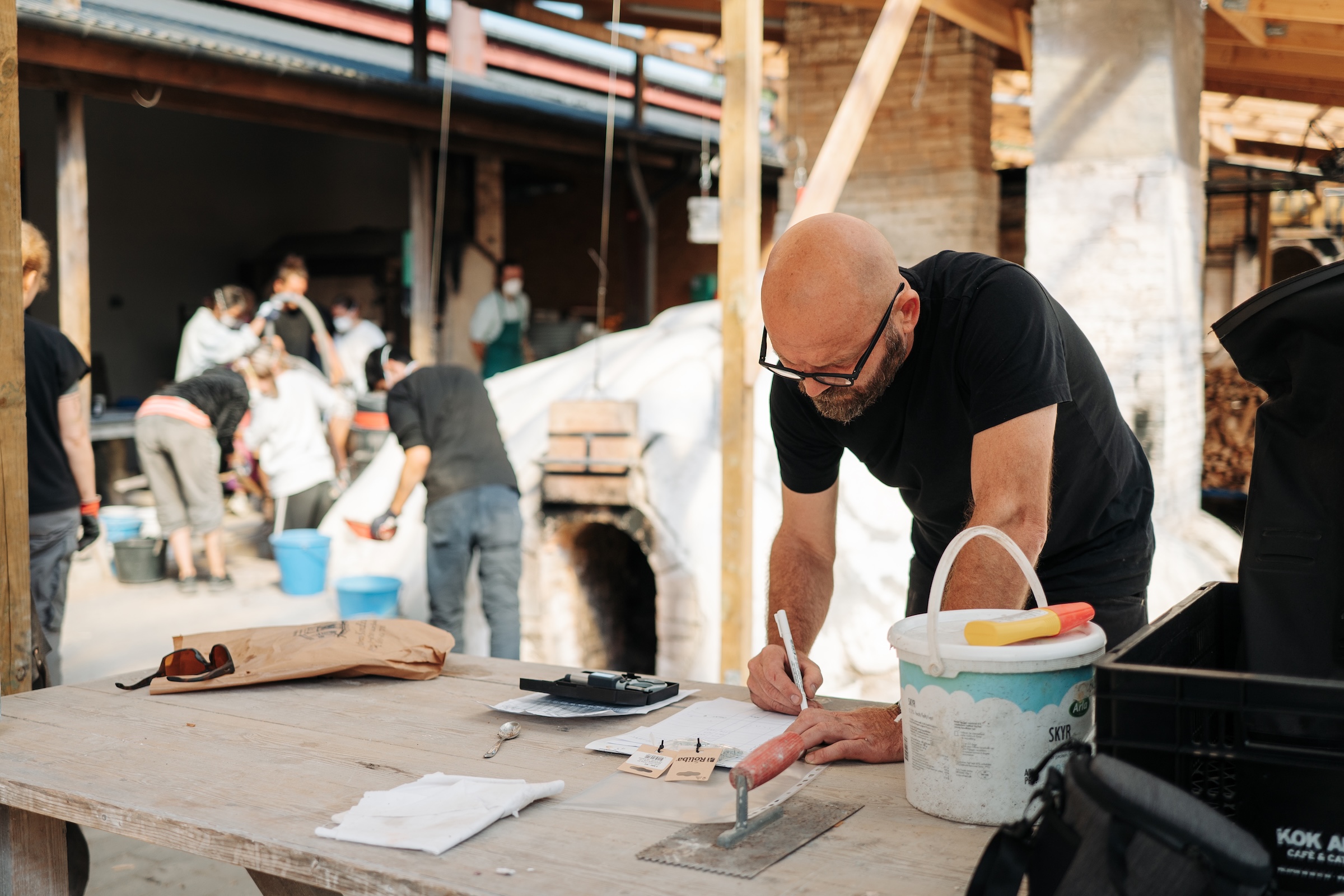
Wood Firing Symposium
14 SEP-25 OCT 2026
DEADLINE FOR APPLICATION: 15 JULY 2026
This six-week residency brings together practitioners who are passionate about wood-fired processes, exchange and sharing of experiences, and collective learning.
Guldagergaard invites ceramic artists and potters to apply for the 2nd Wood Firing Symposium.
The residency is structured in two phases: three weeks dedicated to making work in the studio, followed by three weeks of firing across several distinct wood-fired kilns.
Taking place in one of the few kiln yards in the world with such a broad range of wood-fired kilns gathered in one location, the symposium celebrates Guldagergaard’s renewed kiln yard and the rich diversity of firing methods, atmospheres, and aesthetic outcomes that wood can offer.
Participants will contribute to and learn from the shared experience of working with the fire, atmosphere, and time.
Throughout the residency, participants will take part in a program of artist talks, demonstrations, and a seminar featuring guest artists. Shared work and dialogue in the kiln yard will be central to the experience, encouraging conversation around processes, approaches, and the evolving traditions of wood-firing.
Several firing leaders will participate in the symposium for the full six weeks, working alongside the other participants, offering participants extended access to expertise, mentorship, and in-depth knowledge through daily shared practice.
Because of the intensity of the program, the symposium is open only to those who have some experience in wood-firing, and awareness of the labor involved.
Outside visitors will have the opportunity to take part in the artist talks, the open studios day, as well as the seminar. For more information, see the Events section.
Details
Language: English
Participants: 8
Price: 15.000 DKK
The price includes:
– Accomodation and studio space
– Use of studio equipment and facilities
– Participation in the seminar as part of the symposium
– Guidance from technicians + firing leaders
– Seven bags of high fire clay + a bag of clay for the Nanban firing
– Glaze materials + range of ready-made wood-fired glazes to choose from
– Bisque firings
– Wood for the wood-firings
– All the necessary equipment for the wood-firings
Questions
For any information related to the symposium and the public events, please contact Ana at ana@ceramic.dk
For any information related to the wood-firings, please contact Oliver at oliver@ceramic.dk.
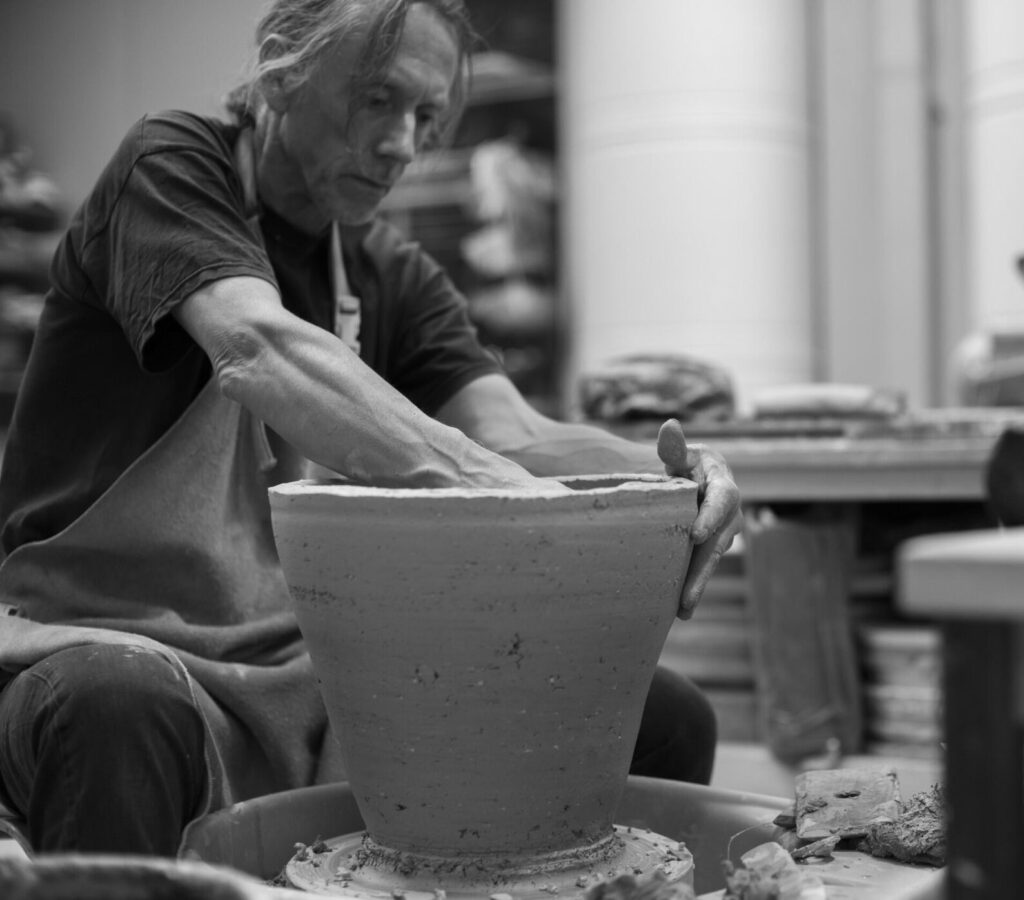 Jari Vesterinen
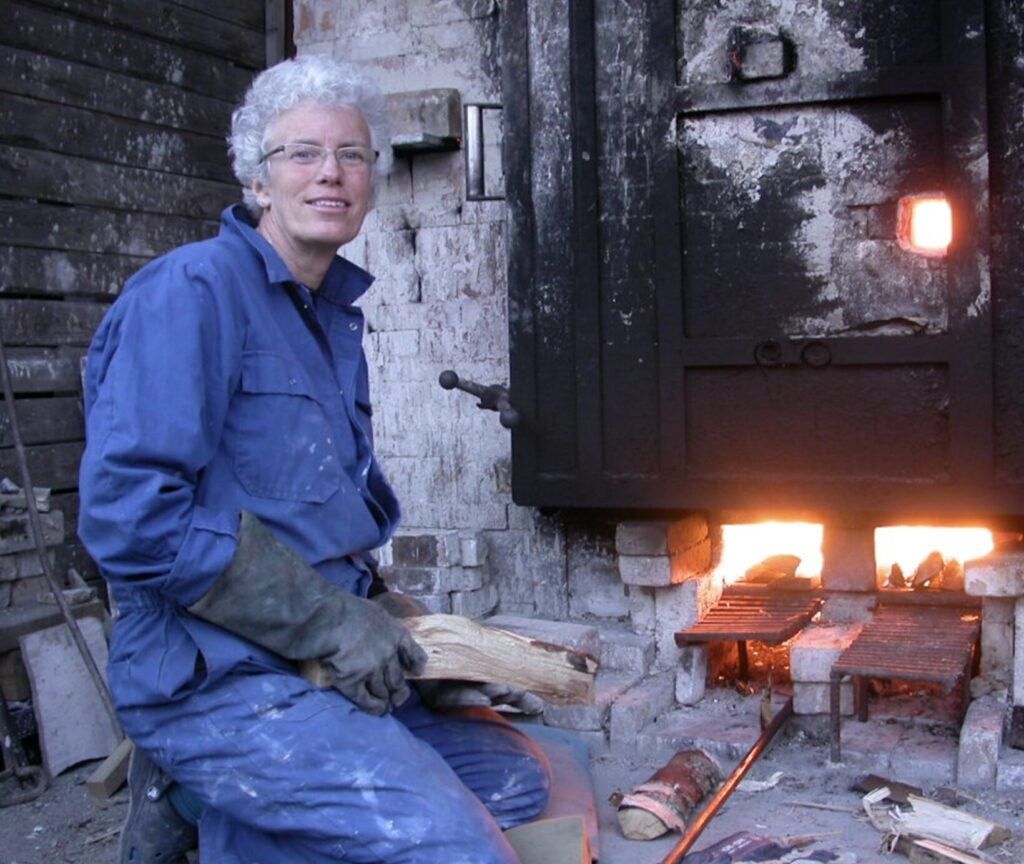 Elisa Helland Hansen
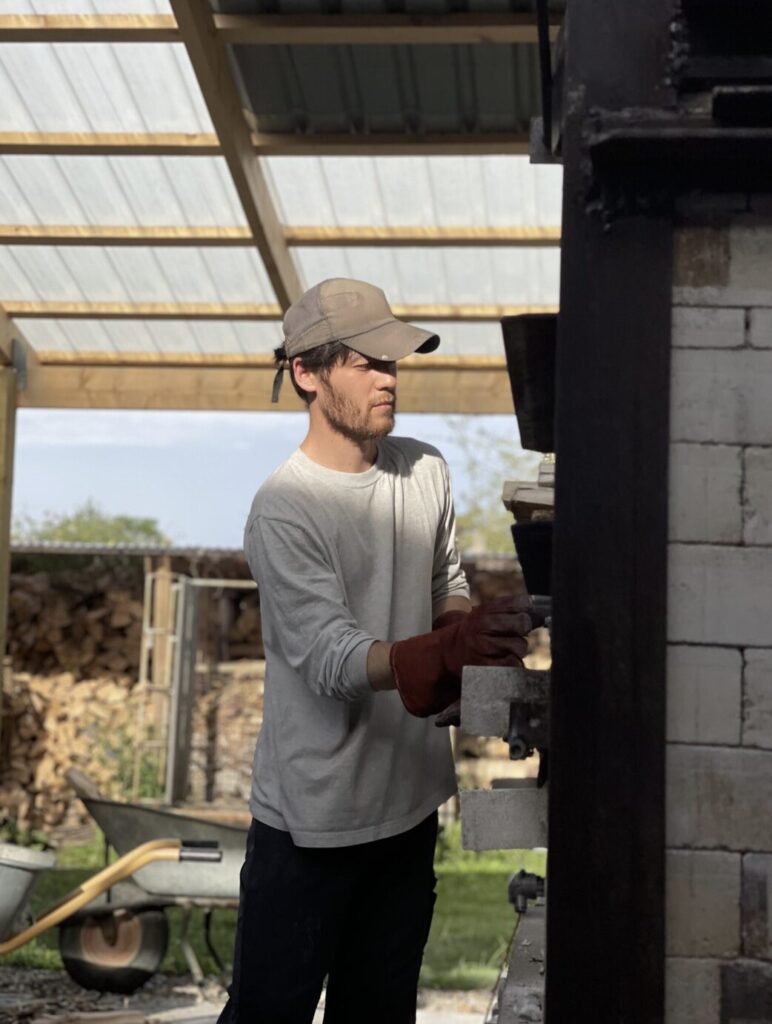 Yuichi Romita
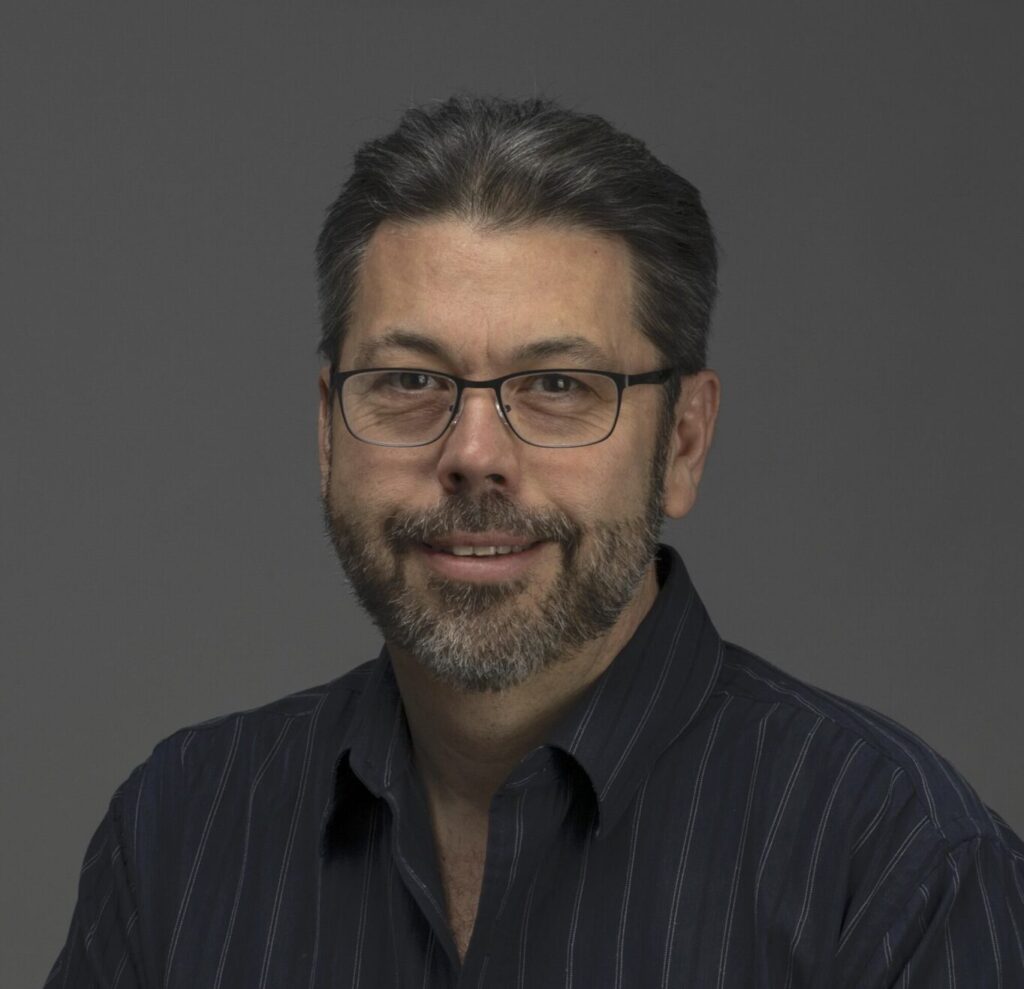 Ted Neal
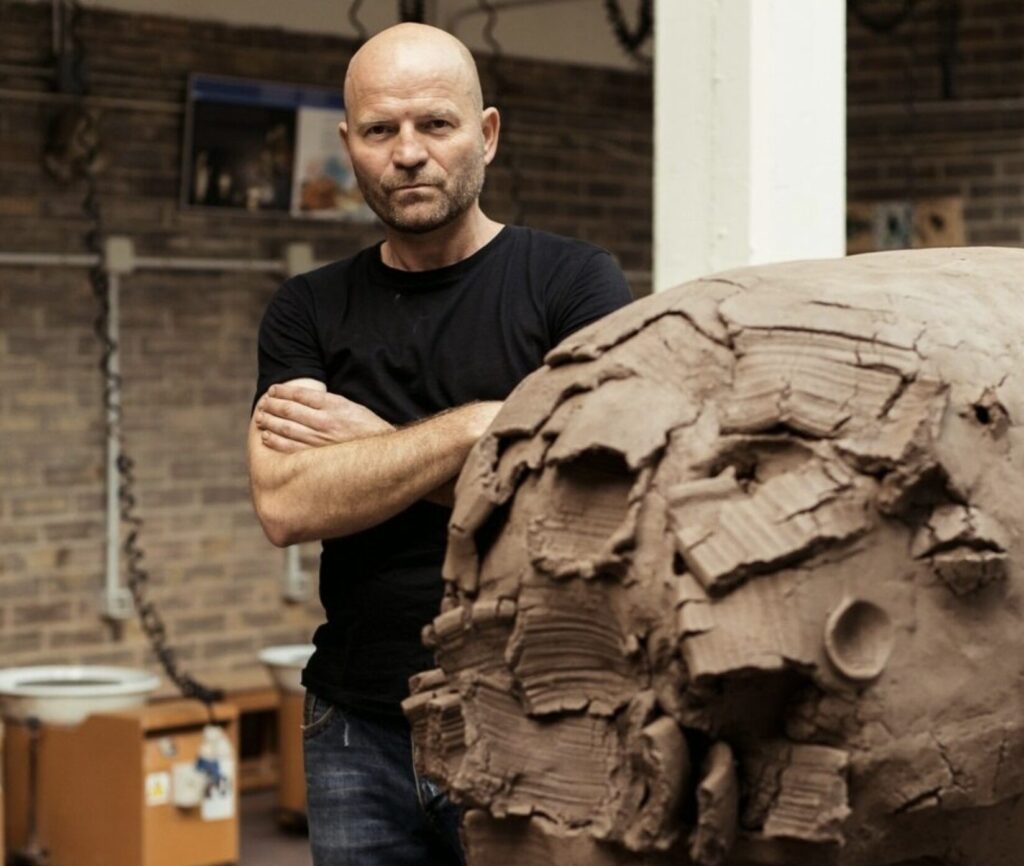 Michal Puszczynski
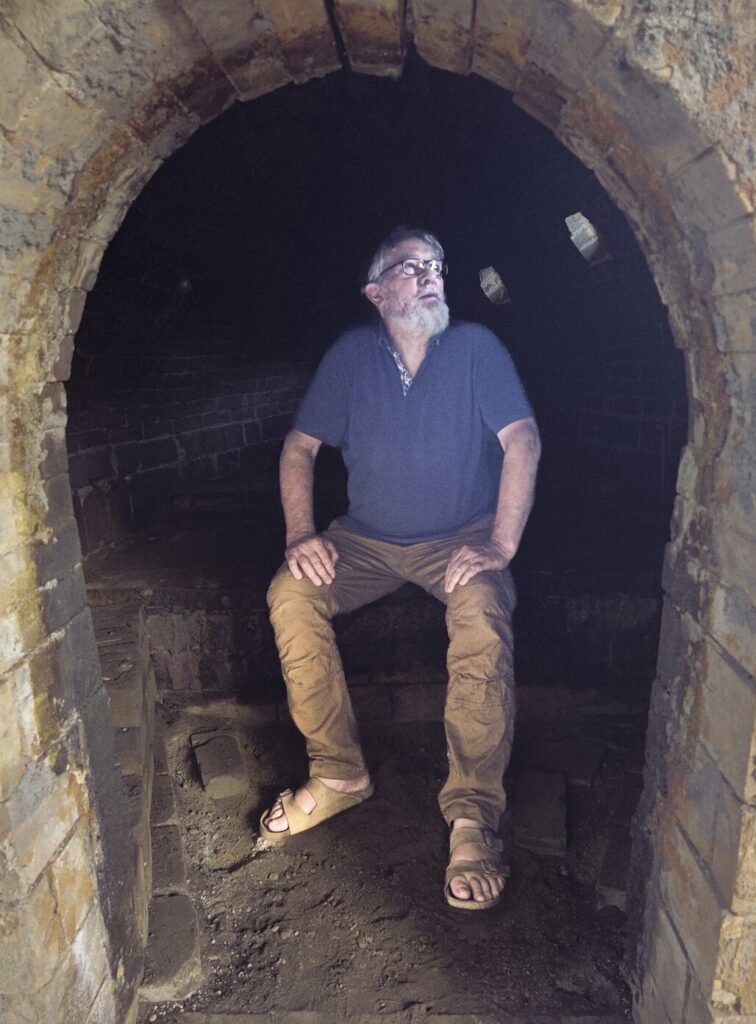 Thiebaut Chague Photo: Xavier Lambours
Leaders
Jari Vesterinen (Finland)
Jari Vesterinen (b. 1964) is a Finnish ceramic artist, potter, and educator based in Mallusjoki, Orimattila. His practice is grounded in the use of self-dug Finnish wild clays and anagama wood-firing, where heat, ash, and chance are embraced as formative forces rather than flaws. He works with his own large anagama kiln, which is central to both his artistic process and his understanding of historical continuity and collaboration with natural forces. Vesterinen’s large-scale vessels are conceived as human-like figures—bearing stories, temperaments, and a tension between fragility and strength. Sustainability is fundamental to his work: clays are dug in Northern Finland, wood is sourced locally, and glazes are made from carefully collected ashes. He is a key organizer of the Kaolin Festival and Chair of the Wild Clay Association, actively promoting the use of domestic materials and wood-firing culture. Vesterinen holds an MA from Aalto University and has exhibited and taught internationally.
Thiebaut Chague (France)
Thiébaut Chagué (b. 1958) is a French ceramic artist known for his sculptural wood-fired stoneware works. He began his ceramic training in 1976 in France, Belgium, and England, studying with influential figures such as Michael Cardew, Richard Batterham, Pierre Culot, and Owen Watson. After returning to France in 1981, he established his first workshop in the Loire Valley and later, in 1984, built a studio in the Vosges, where he works with his own anagama wood-fired kiln.
Chagué’s practice is rooted in an intense physical and philosophical engagement with clay and fire. His work embraces transformation, uncertainty, and the generative “violence” of firing, allowing structure and form to emerge through processes of construction and deconstruction rather than pre-determined outcomes. In 2009, he gained international recognition for a monumental clay sculpture fired in the courtyards of the Victoria & Albert Museum in London to mark the opening of its new Ceramics Galleries. His work is held in major public collections across Europe, including the V&A, and he has recently exhibited at the Louvre.
Elisa Helland-Hansen (Norway)
Elisa Helland-Hansen (b. 1950) is a Norwegian potter, raised in Bergen and educated at the Bergen School of Arts and Crafts in the mid-1970s. In 1981 she built a two-chambered wood-fired kiln outside Bergen, which she fired and worked with for 25 years. Today she works full time in her studio in Rosendal, primarily using a gas kiln, while continuing to wood-fire a salt/soda kiln twice a year in Balestrand.
Over a career spanning five decades, Helland-Hansen has devoted her practice to functional ceramics for everyday use, with a particular focus on pots for cooking and shared meals. “Useful things move me, especially those that are handled daily. Cooking and shared meals also spark ideas in my studio practice. I aim for multiple qualities in one object: a colour that excites, a shape that entices, a weight that stimulates, a surface that invites, a volume that is enough, a detail that you want to remember”
She exhibits widely in Norway and internationally, and from 2000 to 2005 she served as Head of the Ceramic Department and Professor at HDK, University of Gothenburg.
Yuchi Romita (Japan/Italy)
Yuichi Romita (b. 1992) is a Japanese-Italian ceramic artist trained in Karatsu-yaki, a traditional Japanese wood-fired pottery tradition. He completed a four-year apprenticeship under Nakazato Tarouemon, the 14th-generation master potter of a family designated as Living National Treasures of Japan. During his time in Karatsu, Romita developed deep knowledge of processing wild clay, operating the noborigama kiln, and working with traditional tools and techniques.
His practice is shaped by the philosophy of Japanese craftsmanship and a strong connection to the ritual of eating, with vessels conceived to heighten the sensory and cultural experience of the table. Romita is particularly experienced in Nanban yakishime firing, a Japanese cone 6–7 wood-firing approach for unglazed work using iron-rich clay bodies.
Kilns
Fred Olsen’s Multidirectional Draft Kiln (Embla)
Built in 1998, Embla was the first kiln constructed at Guldagergaard, at a time when the surrounding area was still an open field. Designed by Fred Olsen, the kiln combines elements of the anagama and a modified groundhog kiln, resulting in a multidirectional draft system that allows for varied firing pathways and conditions.
Thiebaut Chague (FR) will be leading high-fired glaze firing in the Embla kiln.
The Anagama Kiln (Babygama)
Built in 2000 by Estonian kiln master Andres Allik, the Anagama Kiln—also known as the Babygama—is a smaller-scale anagama at Guldagergaard. The kiln includes a rear chamber, known as the sutema, which helps stabilise conditions in the main chamber and can also be used for firing work when a lower ash deposit is desired.
Jari Vesterinen (FI) will lead a high-fired glaze firing in the anagama kiln during the symposium.
Train Kiln
The Train Kiln was built in 1999 by Robert Sanderson as the second kiln at Guldagergaard. It was rebuilt in 2013 by Estonian kiln master, Andres Allik, retaining the original design while improving its structural integrity.
Yuichi Romita will be leading a Nanban firing in the train kiln.
About Nanban Yakishime
Nanban Yakishime (unglazed stoneware) is a technique developed by Takashi Nakazato in Karatsu, Japan. A 13th-generation potter from a lineage dating back to the 1300s, Takashi began experimenting with the iron-rich clay of Tanegashima Island to create a new style of unglazed pottery. Rather than relying on glazes, this method celebrates the inherent qualities of the clay—its minerals, textures, and natural impurities.
During wood-firing, flames and embers shape the appearance of each piece. The way the kiln is packed determines how the fire flows around each form, resulting in vessels marked by soft waves, natural tones, and unique surface textures. Some pieces emerge with a rainbow of colors; others display a rich layering of ash and rough, earthy finishes
The Big Soda Kiln
Guldagergaard’s current Big Soda Kiln was built by Andres Allik (EE) in 2017, based on an old electric kiln donated by Richard and Bodil Manz. During late spring 2026, the kiln will be rebuilt by Guldagergaard’s kiln yard staff following a new design by Charles Bottin (FR).
Elisa Helland-Hansen (NO) will lead a high-fired glaze firing in both soda kilns during the symposium.
The Speedy Soda
The Speedy Soda is a small Fenix-type kiln built by Henrik Schone (DE) in 2014. Originally not intended for soda firing, the kiln was repurposed in 2021 when Andres Allik (EE) rebuilt and adapted it for soda use.
Elisa Helland-Hansen (NO) will lead a high-fired glaze firing in both soda kilns during the symposium.
Public Events during the Symposium
19 – 20 SEP Artist Talks
Time: 10:00–15:00 both days, including a lunch break (lunch not included)
Number of participants: 40
One day — 50 DKK
Both days — 100 DKK
LUNCH
One day — 200
DKK Both days — 350 DKK
Coffee and tea are included.
As part of the Wood-Firing Symposium, participants of the residency will present artist talks, sharing their individual practices, processes, and reflections on working with wood-fired ceramics. These sessions provide an opportunity to engage with the creative approaches and ideas of fellow residents, fostering dialogue, exchange, and insight into the diverse ways artists explore form, surface, and firing techniques. Open Studios, 26th of September.
Sign up and availability: Please contact Oskar at oskar@ceramic.dk.
26 SEP Open Studios
Two groups of 15 participants
First group: 10:00 – 11:00
Second group: 11:00 – 12:00
Price: 100 DKK
As part of the Wood-Firing Symposium programme, Open Studios invites visitors to meet the symposium participants in their working environment at Guldagergaard. Guests will have the opportunity to learn about the artists’ processes, see works in progress, and engage directly in conversation with the residents.
The group meets in front of the main studio building.
Sign up and availability: Please contact Oskar at oskar@ceramic.dk.
3-4 OCT Wood Firing Seminar
Maximum number of attendees per day: 60
Price for both days: 750 DKK (students: 200 DKK)
Price for one day: 550 DKK
Language: English
This seminar brings together guest artists and the leaders of the wood-firing sessions, who will give lectures on their areas of expertise and share insights from their practice. In addition to the talks, participants will have the opportunity to witness live demonstrations by Ted Neal and Michal Puszczynski, showcasing large-scale sculpture building and advanced throwing techniques. The program offers a unique chance to learn directly from experienced practitioners and to explore the processes and ideas behind contemporary wood-fired ceramics.