

Onggi Residency
1-31 AUG 2026
A four-week immersive programme dedicated to traditional Korean pottery, its living culture, and its contemporary relevance. Held during the Claytopia Festival, the residency offers a rare opportunity to learn directly from Master Hyangjong Oh, one of Korea’s leading Onggi artisans, together with his expert team of five.
Participants will spend the first two weeks in an intensive Onggi-making workshop, learning to build vessels using age-old techniques that have been passed down over millennia. During the final two weeks, residents will fire their works in Guldagergaard’s small anagama kiln under the guidance of the Hyangjong Oh and his Korean team.
Over the course of the residency, participants will experience the deep material, cultural, and communal traditions embedded in Onggi practice. They will also have access to the Onggi Culture Lab workshops and public events (see programme below).
This residency offers artists, potters, and researchers a once-in-a-lifetime chance to work intensively with master craftspeople, expand their understanding of clay as a living material, and join a vibrant international community during Claytopia.
About the Onggi Technique
Onggi is the traditional Korean earthenware that originated from early Jeju Island pottery over 10,000 years ago, making it one of the oldest continuous ceramic traditions in the world. Developed across the Korean Peninsula, Onggi vessels have played an essential role in daily life: storing fermented foods such as kimchi and jang, transporting goods, cooking, collecting water, and even forming architectural elements.
At the heart of Onggi lies its unique “breathing” quality. The clay body is porous yet strong, allowing air to pass slowly through the vessel walls. This natural airflow creates the ideal environment for fermentation, stabilising temperature, encouraging beneficial microorganisms, and enhancing flavour.
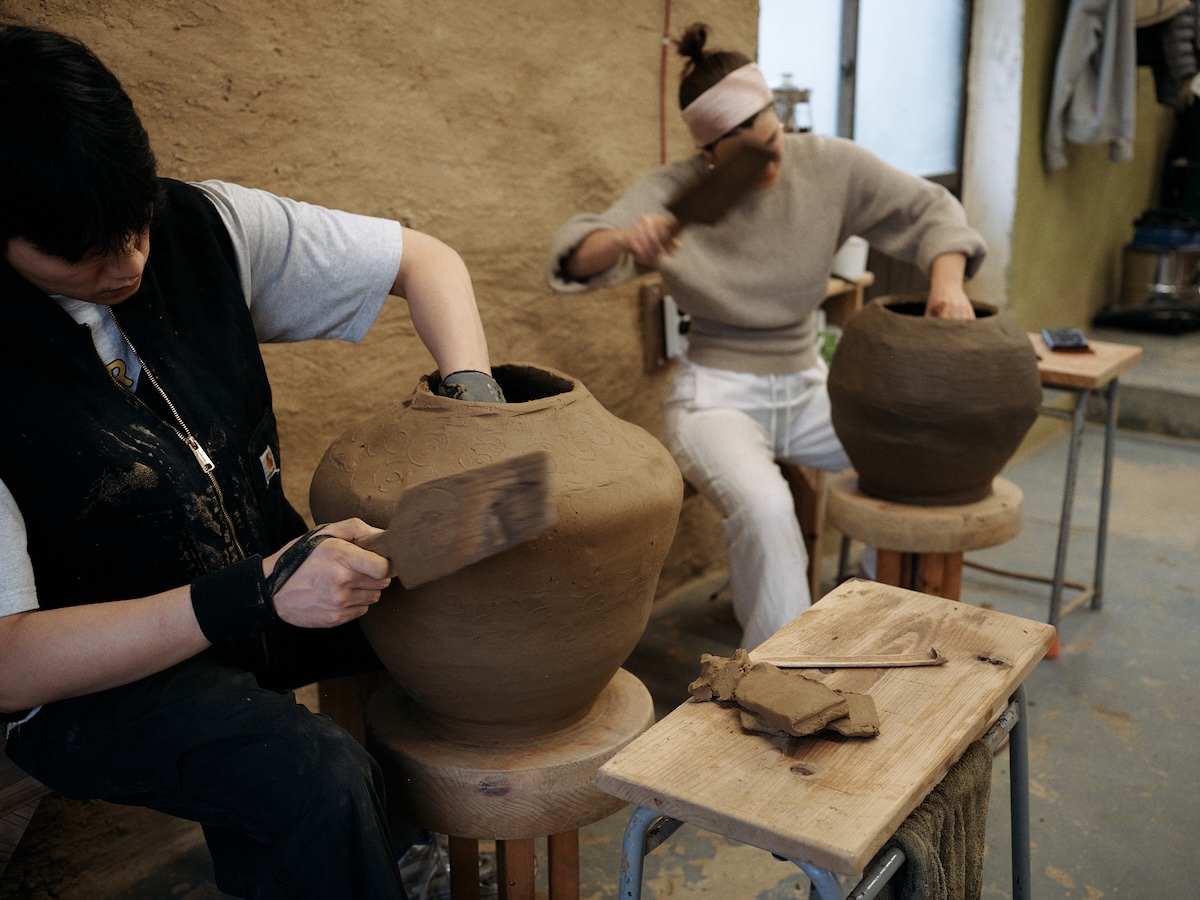
Onggi vessels are traditionally made using coil-building techniques combined with specialised tools and highly skilled hand-spinning methods. Large jars are built swiftly and rhythmically, with artisans often creating forms of considerable scale in a single day. The technique demands precision, sensitivity, and a distinctive embodied knowledge developed through generations of practice.
Today, Onggi continues to evolve as both a functional craft and a contemporary artistic language. Its timeless forms, ecological sensibility, and connection to food culture offer new possibilities for artists working at the intersection of material research, sustainability, and cultural heritage.
The Korean Team
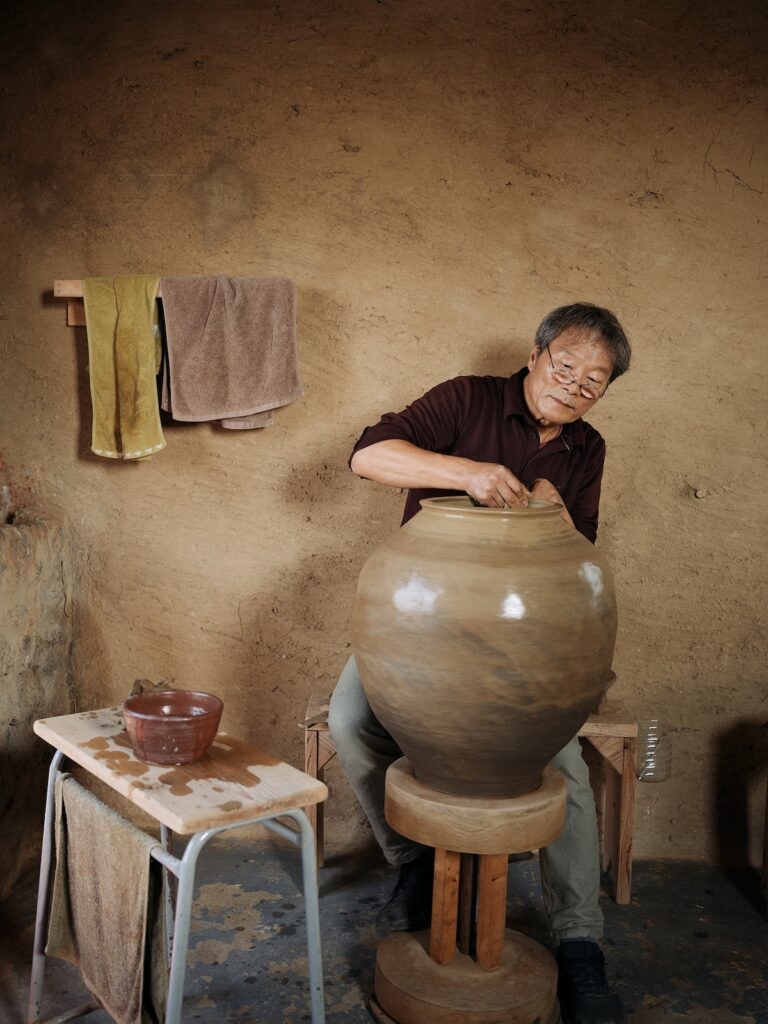 Hyangjong Oh
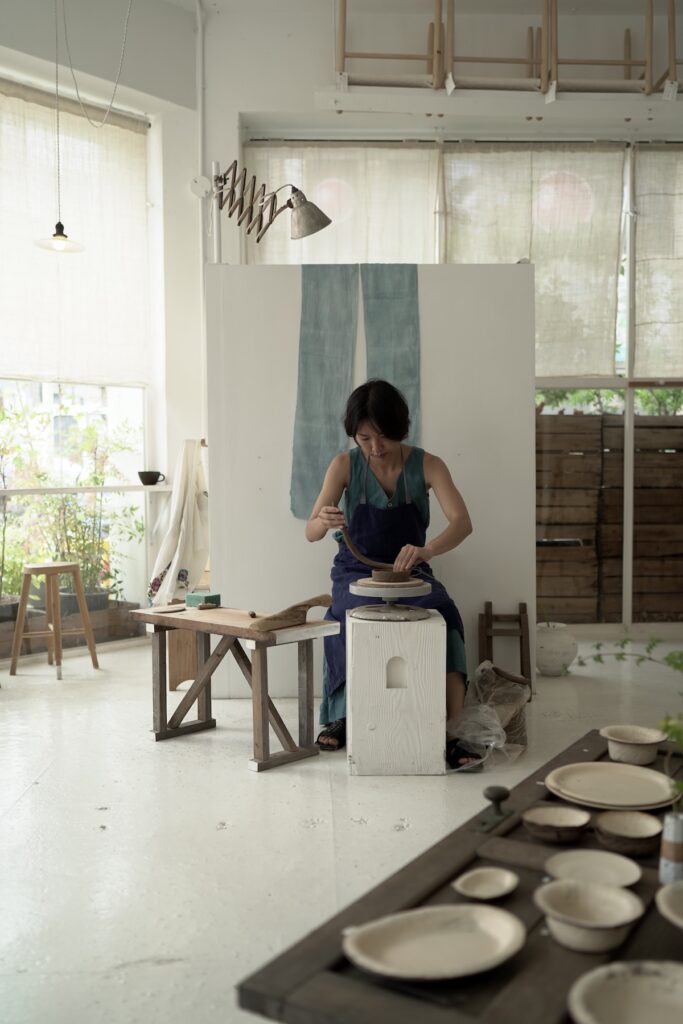 A-ra Jo
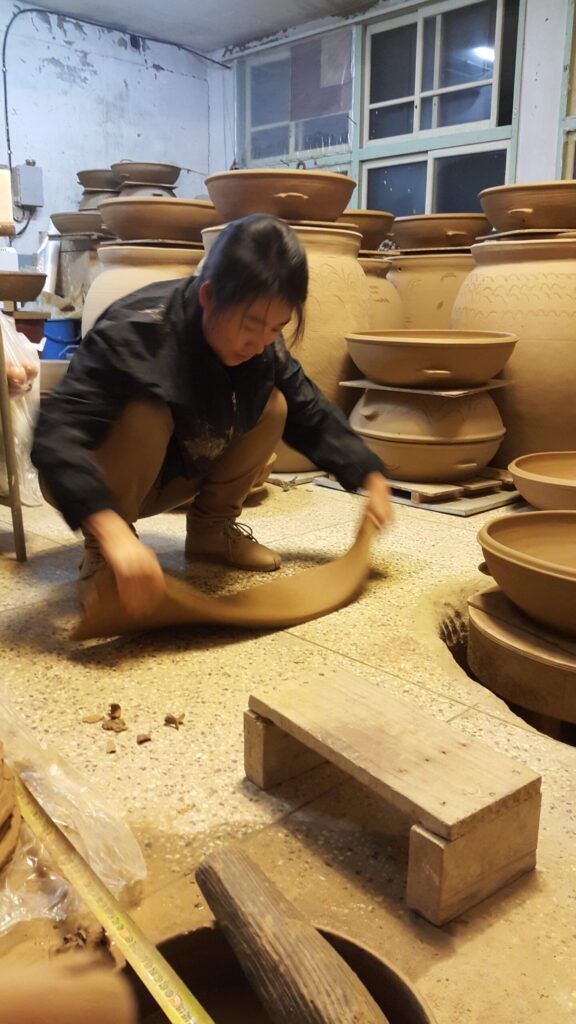 Mira Yang
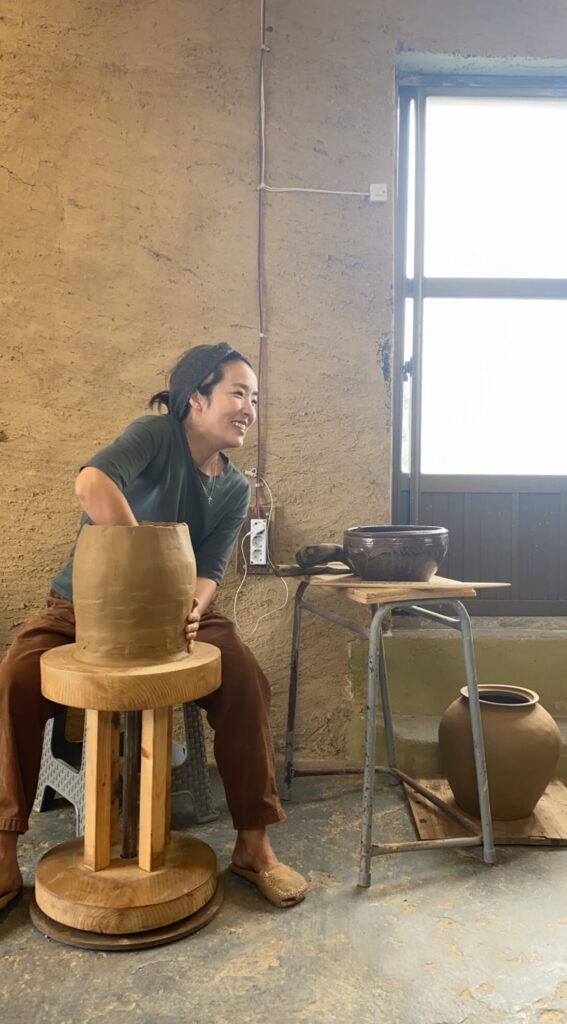 Jeewon Park (Mosey)
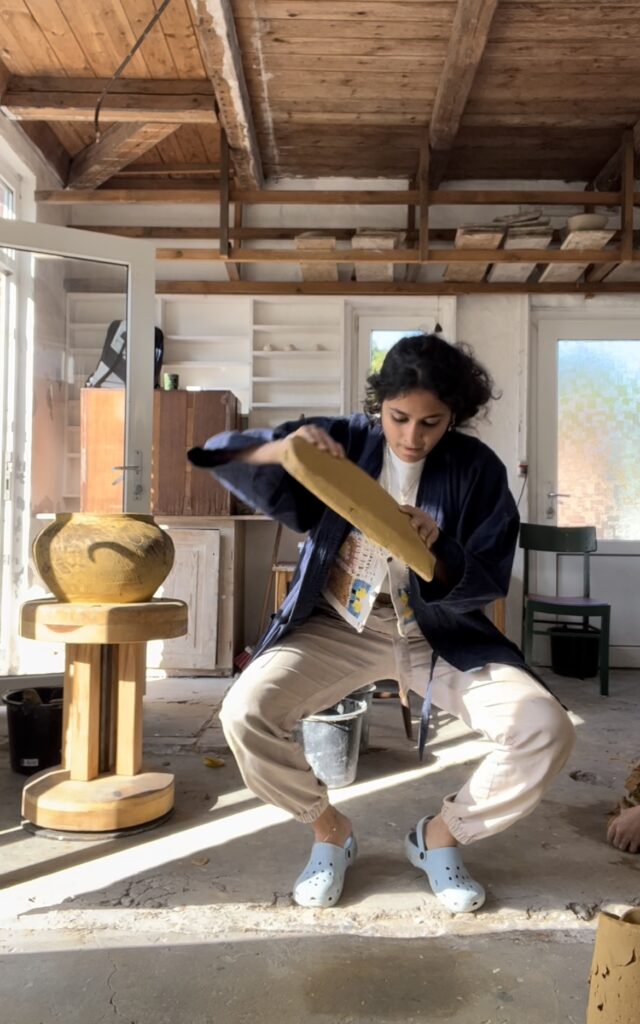 Ekta Bagri
The Onggi Culture Lab residency is led by Hyangjong Oh, one of South Korea’s most respected Onggi masters. With over four decades of experience, Oh is internationally recognised for his profound mastery of clay and his deep commitment to preserving and reinterpreting traditional Onggi practices. Trained in pottery arts at Dankook University, and with a long teaching career at institutions such as Honam University and the Korean National University of Cultural Heritage, his practice bridges tradition and contemporary expression. His work ranges from classical Onggi vessels and moon jars to large-scale installations and performative processes, grounded in a process-oriented approach. Oh has been invited to major international ceramic festivals worldwide, including Argilla Italia, the British Ceramics Biennial, and the International Ceramics Festival in Wales.
Working alongside Hyangjong Oh is a diverse Korean team of artists and practitioners who contribute to the Onggi residency and the Onggi Culture Lab programme as part of Claytopia 2026 through making, workshops, and public talks: A-ra Jo, Ekta Bagri, Jeewon Park (Mosey), Mira Yang, and Seenae Kang. Together, the team brings a rich spectrum of perspectives on Onggi, offering insight into it as a living, evolving tradition.
The Anagama Kiln (Babygama)
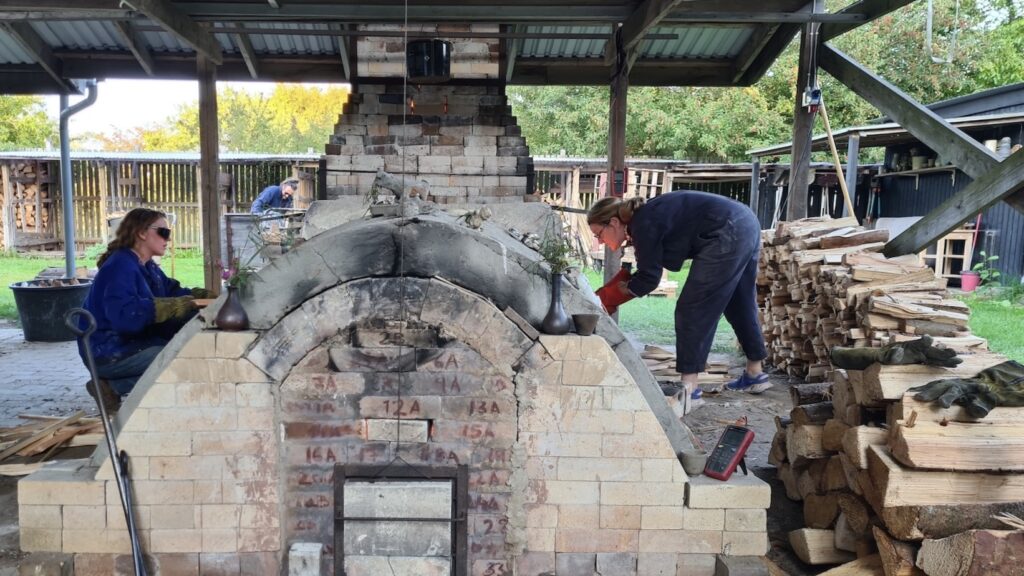
Built in 2000 by Estonian kiln master Andres Allik, the Anagama Kiln, also known as the Babygama, is a smaller scale anagama at Guldagergaard. The kiln features a rear chamber, known as the sutema, which helps stabilise conditions in the main chamber and can also be used for firing work when a lower ash deposit is desired. A typical firing lasts three days, followed by a cooling period of three to four days.
Calendar for the Onggi Residency
Aug 1 Arrivals (Important: Participants must arrive between 10:00 and 15:00)
Aug 2 Arrivals (Important Participants must arrive between 10:00 and 12:00)
13:00 Welcome meeting + Guldagergaard Tour
Aug 3-7 10:00 – 18:00 Onggi Workshop
Aug 8 Rest Day (participants practice on their own)
13:00 Artist Talk – Hyangyong Oh:“Korean traditional Onggi and my work”
(go to Claytopia.dk for more details)
Aug 9 Rest Day (participants practice on their own)
13:00-16:00 ONGGI CULTURE LAB: Korean Traditional Onggi Demonstration & Kimchi-Making Workshop
(go to Claytopia.dk for more details)
Aug 10-14 10:00 – 18:00 Onggi Workshop
Aug 15 Rest day, Pots dry, Preparing wood
13:00 Artist Talk – Ekta Bagri: “Breathing Fire: Flame, atmosphere, and the character of Jeju Onggi”
(go to Claytopia.dk for more details)
Aug 16 Rest day, Pots dry, Preparing wood
13:00-14:00 ONGGI CULTURE LAB: Korean Tea Ceremony — Hands-On Experience
(go to Claytopia.dk for more details)
Aug 17 09:00 Start loading anagama, Preparing wood
Aug 18 09:00 Loading anagama, Start firing anagama, Preparing wood
Aug 19 Firing anagama, Preparing wood
Aug 20 Firing anagama
Aug 21 Firing anagama, Finish firing in the evening
Aug 22 Rest Day, Kiln cools down, Free Activities
13:00 Artist Talk – Jewoon Park (Mosey): “Jeju clay and my work”
(go to Claytopia.dk for more details)
Aug 23 Rest Day, Kiln cools down, Free activities
Aug 24 Rest Day, Kiln cools down, Free activities
Aug 25 Rest Day, Kiln cools down, Free activities
Aug 26 Unloading the anagama, Cleaning
Aug 27 Free activities, Cleaning
Aug 28 Free activities, Packing
Aug 29 13:00 – 15:00 ONGGI CULTURE LAB – Artwork Table Experience & Makgeolli Brewing Workshop
(go to Claytopia.dk for more details)
Aug 30 18:00 ONGGI CULTURE LAB – Hyangjong Oh: Painting of Large Sculptures Performance
(go to Claytopia.dk for more details)
Aug 31 Packing
Sep 1 Departures and good byes
Please note that the schedule is subject to change depending on the suggestions from the Korean team. For example, the loading of the kiln might last three days instead of two, or the preparation of wood for the firing might start earlier, etc.
Details on the Residency
Language: English
Participants: 7
Price: 16.000 DKK
The price includes:
– Accomodation
– 60 kg of clay per participant
– All the necessary tools and equipment
– Participation in the workshops and events as part of the Onggi Culture Lab Programme
– The centre will provide the necessary tools and equipment during the residency.
What you need to bring
– Dust mask with respirator
– Long trousers, long-sleeve shirt, and a hair bandana — all made only from natural fibres (firing the kiln with short trousers, and/or clothes made from synthetic fabric is strictly forbidden)
– Strong trainers or boots (firing the kiln and splitting wood in sandals or flip-flops is strictly forbidden)
A deposit of 300 DKK in cash is required upon arrival in order to receive the keys for your room and the studio.
Questions
For any information related to the residency program, please contact Ana at ana@ceramic.dk. For questions related to booking, please contact Oskar at oskar@ceramic.dk.
Workshops and Public Events during the Residency
As part of the Claytopia Festival, the Onggi Culture Lab presents a series of workshops and cultural experiences designed to share the Korean craft, food, and aesthetics with a wider audience.
Drawing inspiration from traditional Onggi artisanship, the programme bridges past and present, craftsmanship and lifestyle, clay and community. And guided by the philosophy of “breathing Onggi,” the lab emphasizes sustainability, embodied knowledge, and the sensory pleasures of fermentation and tea culture. Across August, participants in the Onggi residency and visitors can engage with hands-on workshops, live demonstrations, and immersive experiences that celebrate Korea’s living traditions.
(All participants in the Onggi Residency have free access to the workshops and talks in the following public programme)
Onggi Culture Lab – The Public Programme
1. Korean Traditional Onggi Demonstration & Kimchi-Making Workshop
9th of August, 1pm – 4pm
Experience the living traditions of Korean fermentation at Guldagergaard this summer. In this unique workshop, participants will explore the artistry of Onggi, Korea’s breathable earthenware vessels, and learn how to make authentic kimchi.
The day begins with a live Onggi demonstration, where Master Hyangjong Oh will show how these vessels are skilfully formed for fermentation and daily use – perfect for kimchi, dongchimi, soy sauces, and more. Following the demonstration, participants will engage in a hands-on kimchi-making session, preparing their own kimchi in small groups, tasting fresh kimchi, and taking home 200 g of their creation.
Workshop Details:
Spectators: Up to 100
Active participants: 13 (7 residents + 8 from outside)
Duration: ~3 hours (1h Onggi demo + 2h kimchi-making)
Resident Price: 0 DKK (350 DKK for non-residents – buy ticket here)
Guldagergaard provides all ingredients and equipment for the kimchi workshop
Why Onggi Matters:
– Supports natural airflow for stable fermentation
– Enhances flavour and aroma
– Ideal for long-term food storage
– Central to Korea’s UNESCO-listed Kimjang tradition
In addition, workshop participants and visitors will have the opportunity to purchase Onggi pots created by Master Hyangjong Oh and Solchan Oh during their residency at Guldagergaard in July 2026, making this a rare chance to take home a piece of Korean ceramic heritage.
2. Korean Tea Ceremony — Hands-On Experience
16th of August, 1pm
An intimate workshop introducing the quiet spirit of Korean tea culture (dado), emphasising simplicity, sincerity, and presence.
Participants: ~20 (7 from the Onggi residents, 15 from outside)
Duration: 1 hour
Resident Price: 0 DKK (250 DKK for non-residents – buy ticket here)
In this workshop, participants will:
– Brew tea using authentic Onggi teapots made from breathable “living clay”
– Taste a variety of green, yellow, and fermented Korean teas
– Experience tea preparation as a mindful, sensory act
– Learn about the aesthetics and philosophy behind Korean tea traditions
In Korea, tea is a gentle way to meet others with an open heart. Through clay, aroma, and warmth, participants reconnect with a slower rhythm of nature.
Special Opportunity:
Workshop participants and visitors will have the chance to purchase Korean tea ware created by Kang Shin-ae and Jo A-ra from South Korea, making it possible to take home a piece of this living cultural tradition.
3. Artwork Table Experience & Makgeolli Brewing Workshop
29th of August, 1pm – 3pm
This immersive event begins at an artwork-table installation composed of makgeolli, Korean finger food, plants, and traditional Onggi vessels. Participants are invited to see, taste, touch, and engage with the setting as a multi-sensory cultural artwork.
Participants: Up to 50
Duration: ~2 hours
Resident Price: 0 DKK (350 DKK for non-residents – buy ticket here)
The experience includes:
– An interactive introduction at the table installation
– A live demonstration of makgeolli (Korean rice wine) brewing
– A DIY Makgeolli Kit for each participant to take home
The table functions as both a sculpture and gathering place, where the aesthetics of Korean food culture meet contemporary artistic expression.
4. Special Event: Sculpture Performance & Korean Dinner
30th of August, 6pm
Performance by Master Hyangjong Oh + Korean cuisine
Throughout August, Master Hyangjong Oh will build two monumental sculptures using the Onggi technique at Guldagergaard. The building stage concludes with a public performance in which the artist will paint the completed works.
Following the performance, a dinner will be served featuring Korean food prepared by a Korean chef.
Resident Price: 0 DKK (550 DKK for non-residents – buy ticket here)
5. Artist Talks
As part of the Onggi Culture Lab programme, members of the Korean team leading the Onggi residency at Guldagergaard throughout August will present a series of artist talks exploring traditional Onggi practices and their contemporary interpretations. Drawing on regional materials, firing methods, and personal artistic research, each talk offers insight into Onggi as a living tradition and its relevance today.
8th of August, 1pm Hyangyong Oh: Korean Traditional Onggi and My Work
15th of August, 1pm Ekta Bagri: Breathing Fire: Flame, Atmosphere, and the Character of Jeju Onggi
22nd of August, 1pm Jewoon Park (Mosey): Jeju Clay and My Work